Beschreibung
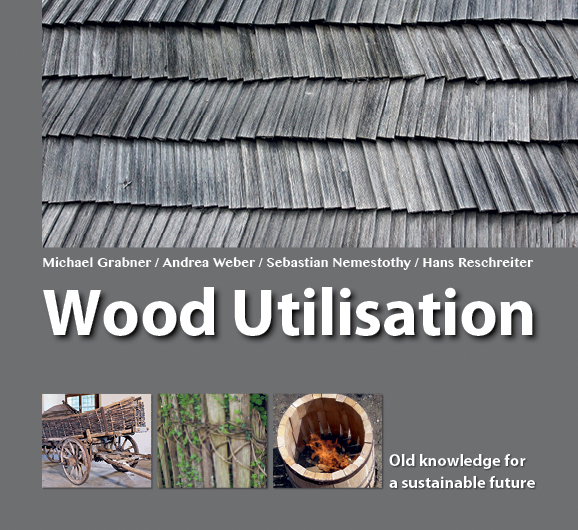
Knowledge about the uses and properties of wood has been accumulated, tested and refined over many centuries, even millennia, and passed down through the generations. In the past, wood was an integral part of daily life. People used it for firewood and timber, and knew how to make the most of it.
Wood was also essential to other industries, including glassblowing, salt production, and mining.
When wood was scarce, it was important to make the most of what was available. To this end, waste during processing was minimised, different wood species were selected for their specific properties, and every part of the log was utilised.
For example, objects made up of several parts were constructed using wood from different tree species. Each part was selected to meet the required specifications. One such example is the loom in the Stübing Open-Air Museum in Styria, which was crafted from eleven different wood species.
However, much of this knowledge and these skills have already been lost to history. Old craft traditions have been rediscovered by analysing museum artefacts and archaeological finds, and by studying ancient literature. This includes information on the best time to fell trees and which species to select, as well as how to use the different parts of a tree. These techniques can now be applied in the modern era.
In this book, the authors present their research findings from the past 25 years. This knowledge is highly relevant to the modern use of wood. Consequently, there is an urgent need to rediscover these skills and knowledge.
This book offers insights into the past, broadening the knowledge of interested woodworkers and inspiring them to explore modern, innovative techniques.